
Introduction
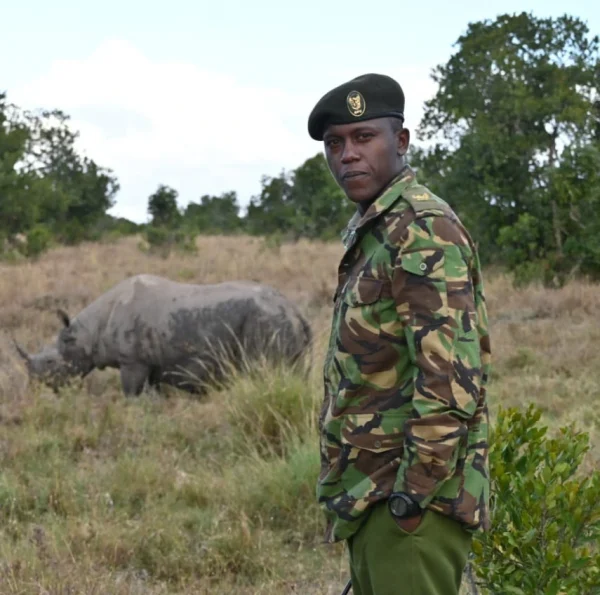
We sat down with Abraham Njenga, our Wildlife Operations Manager, to get a front row seat on one of the most ambitious rhino conservation efforts in Kenya’s history. With over a decade of experience on the ground at Ol Pejeta, Abraham offers a rare and candid perspective on what it truly takes to move the world’s second largest animal across a landscape.
About the Kenya Rhino Range Expansion (KRRE)
Kenya’s black rhino population has made a remarkable comeback, but the next chapter of that story depends on bold, coordinated action across the landscape. The Kenya Rhino Range Expansion initiative was born out of exactly that ambition: a landmark Kenyan Government effort to create a contiguous 3,000 km² sanctuary in Central Kenya, giving rhino populations the space they need to grow, roam and thrive.
How Ol Pejeta is helping to rebuild and reconnect black rhino populations across Central Kenya
There is a moment during a rhino translocation that stays with you. The methodical morning briefing, the sheer size of the loading crates, the low rumble of the transport vehicle pulling away through the dust.
Over the past couple of years, Ol Pejeta has contributed black rhinos to two landmark translocations under the KRRE initiative: six to Loisaba Conservancy and nine to Segera Conservancy, both within the Laikipia landscape. These movements are the first steps in a historical, generation-defining effort to restore and reconnect black rhino populations across their ancestral range in Kenya.
Why Rhino Range Expansion, and Why Now?
Kenya’s black rhino story is one of the great conservation recoveries of our era. From fewer than 380 individuals in the 1980s, the national population has now surpassed 1,000 individuals, a testament to decades of intensive protection and the commitment of conservancies, government and communities working together.
But success has created a new challenge. Key sanctuaries across Kenya, including Ol Pejeta, Borana, Lewa and Ol Jogi, are at or beyond their optimal carrying capacity. When rhinos live too close together they do not breed optimally, they compete for scarce resources, and inbreeding risks grow. The very places that saved the species are now constrained by their own boundaries.
A Source Population, Responsibly Managed
Ol Pejeta’s rhino population has been built over decades through rigorous protection, dedicated vet care and the work of a ranger force that never sleeps. A population that is healthy, on a finite area of land, carries a responsibility: to give back to the wider ecosystem.
The translocations to Loisaba and Segera are the most visible expressions of this. Carefully selected individuals, typically sub-adults between five and seven years old when black rhinos naturally begin to establish their own territories, have been moved to conservancies that have invested in the security infrastructure, habitat management and community engagement needed to receive them. The process is guided by Kenya Wildlife Service, with Ol Pejeta’s team involved at every stage.
Landscape Connectivity: The Bigger Picture
Individual translocations matter enormously, but their true significance lies in what they make possible at scale. The ability of wildlife to move across a network of habitats, rather than remaining isolated in islands of protection, is what turns conservation into something genuinely lasting. The rhinos now establishing themselves at Loisaba and Segera are the beginning of that process, expanding the footprint of viable rhino habitat across a landscape that was once fragmented.
Looking Ahead
Ol Pejeta’s role as a source population is an ongoing commitment, not a one-off contribution. KRRE aims to re-re-establish rhinos in more than 20 new conservancies in Kenya and increase the national black rhino population by over 300 animals, a 30% rise on current numbers.
“Through our work establishing new rhino sanctuaries and supporting the Kenya Rhino Range Expansion initiative, we’re driving meaningful conservation in our wider landscape so that wildlife and people can flourish side by side. By contributing to Segera’s founder population, we’re helping to secure a future where rhinos can thrive, leaving a legacy we’re proud to stand behind.” — Abraham Njenga, Manager of Wildlife Operations
Support our work
Donate, adopt a rhino, shop our online store, or book a visit at olpejetaconservancy.org — every contribution directly funds our work to protect wild rhinos.