
Uruhara was the first chimpanzee to truly see Manno.
At Sweetwaters Chimpanzee Sanctuary, where new arrivals often arrive withdrawn and uncertain, Uruhara did something simple but profound. He approached Manno.
Not with force. Not with hesitation. But with the quiet confidence of a chimpanzee who understood what community meant.
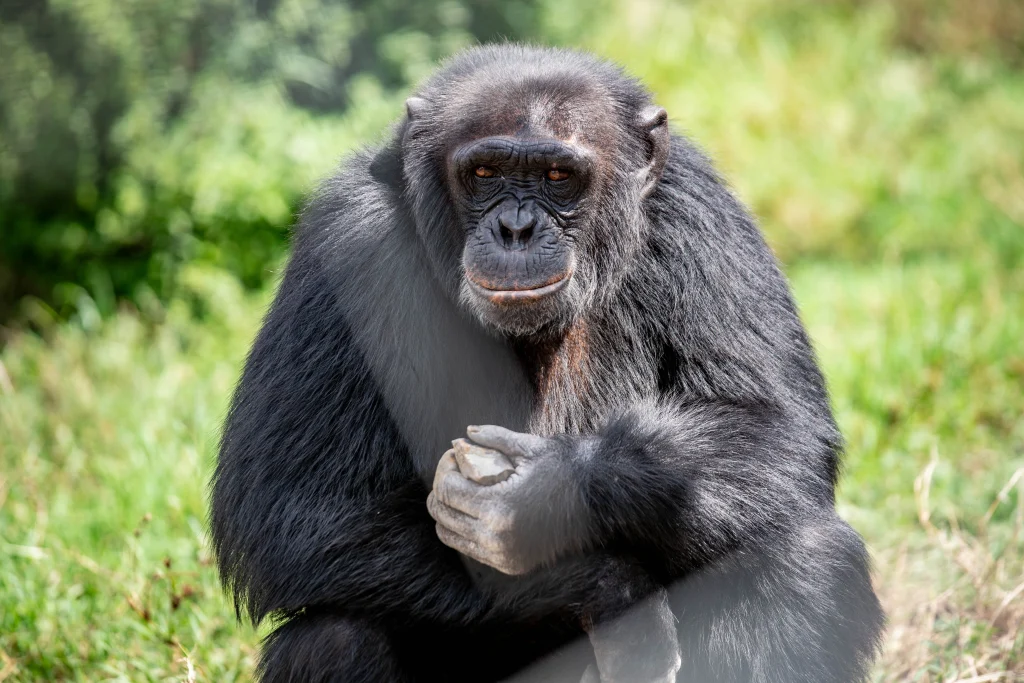
He sat near him. Watched him. Tested the distance between them. And slowly, over time, he began to draw Manno into the rhythms of group life.
Grooming. Proximity. Shared space. Small signals of trust.
For a chimpanzee who had not grown up inside a social world, these were not instinctive experiences. They were lessons.
And Uruhara, in his own way, became the teacher.
Only then does Manno’s story begin to make sense.
Before arriving at Sweetwaters in 2016, Manno’s life had begun at the Damascus Zoo in Syria. Born into captivity, his earliest environment was not one of family or freedom, but of confinement, a setting far removed from the complex social world chimpanzees are meant to inhabit.
He spent his early years isolated from his own kind, without the relationships that teach young chimpanzees how to communicate, play, trust, and survive within a group. That absence would shape everything that followed.
By the time he reached the sanctuary, he was alive, but socially unformed.
He was quiet. Withdrawn. Uncertain of how to exist among others of his kind.
Belonging, for him, was not something to return to. It was something he had never learned in the first place.
At first, he kept his distance. He observed more than he participated. The world of chimpanzees around him, full of grooming, alliances, dominance, and play, moved in ways he did not yet understand.
But change in a sanctuary is rarely sudden
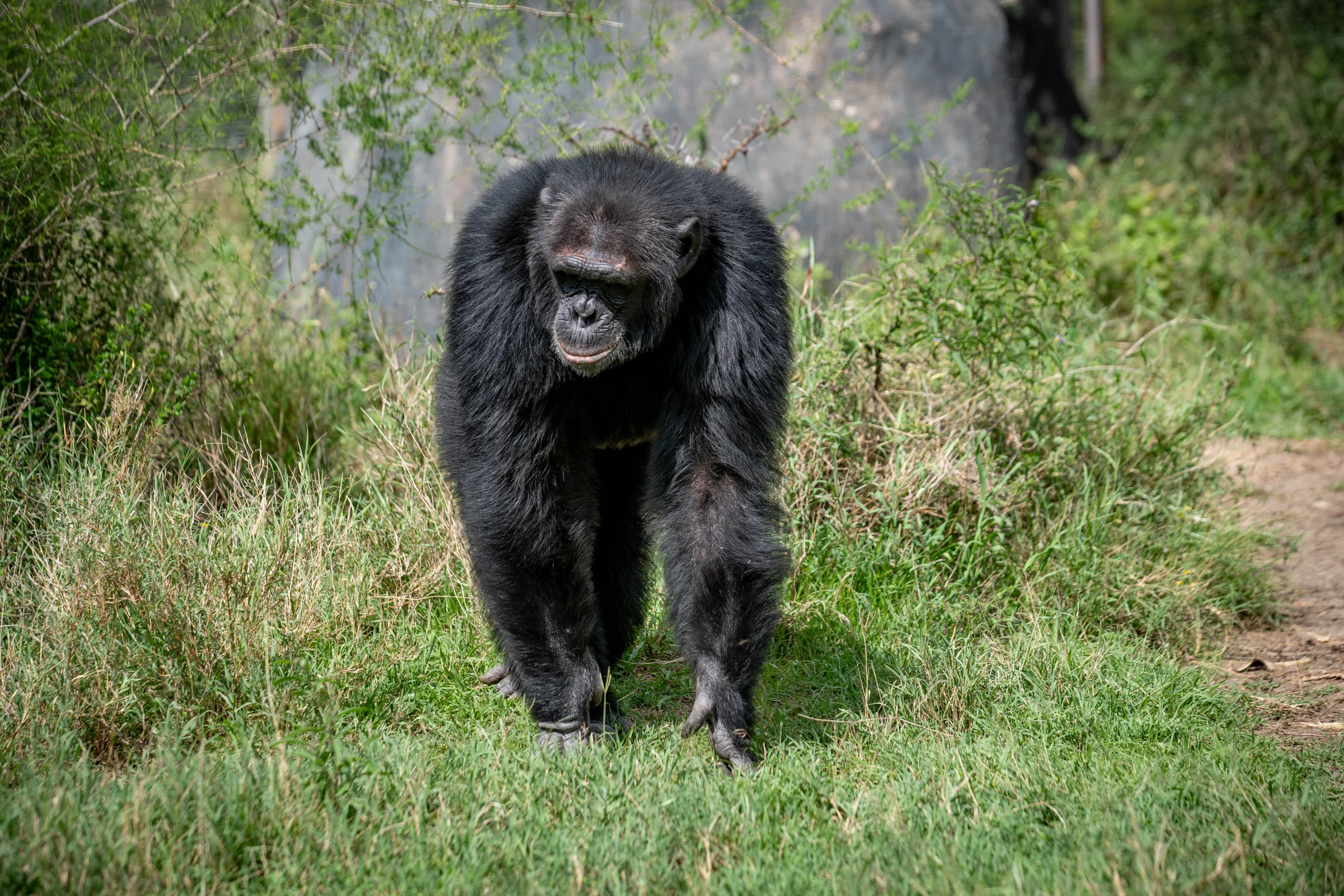
It is built in moments too small to notice at first: a shared space that is not rejected, a presence that is tolerated, a touch that is not avoided.
And slowly, Manno began to change.
Years later, that same chimpanzee who once avoided interaction has become something entirely different.
On the western side of the sanctuary, Manno now asserts himself with growing confidence. He runs and claps to command attention. He throws sticks and stones when he feels challenged. He positions himself more boldly within the social hierarchy, as though testing the boundaries of who he is becoming.
The transformation is striking, not because dominance defines him, but because it signals movement. From isolation toward participation. From silence toward presence.
But Sweetwaters is not a story about endings.
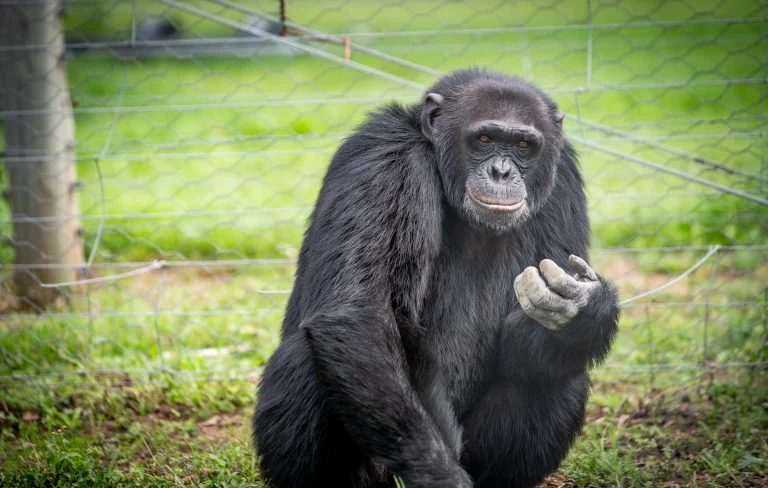
Most of the chimpanzees here will never return to the wild. They were orphaned, trafficked, or raised in captivity for too long to survive independently. The sanctuary is not a transition point. It is their permanent home.
And so belonging here means something different.
It is not about returning to what was lost. It is not about undoing the past.
It is about learning, slowly and imperfectly, that life can still hold others. That trust can be rebuilt. That identity can grow in the presence of community.
Manno’s story is not only about survival.
It is about what Uruhara offered him in a single, quiet gesture: the chance to begin again among others, and the long, unfinished process of learning how to belong.
Manno found a place to belong. Now you can help ensure he always has one.
By symbolically adopting Manno, you’ll help provide the lifelong care, nutritious food, enrichment and veterinary support that rescued chimpanzees at Sweetwaters Chimpanzee Sanctuary rely on every day.
Adopt Manno today and become part of his story.
Written By: Dylan Habil