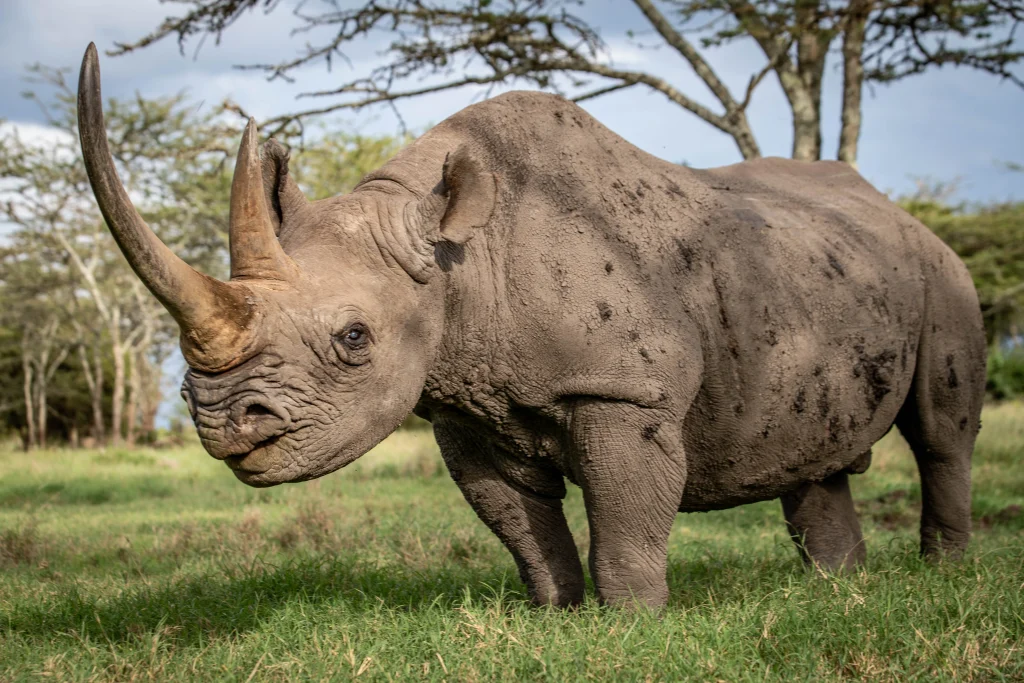
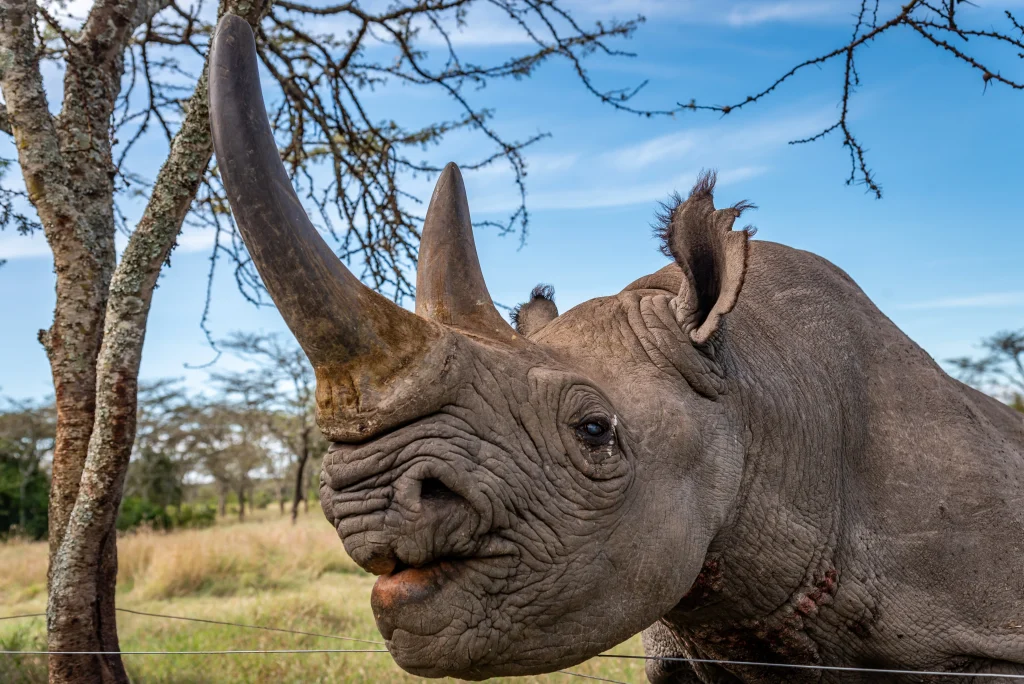
This year, our World Rhino Day celebrations are inseparable from a loss. On 16 August 2026, Ol Pejeta said goodbye to our beloved blind black rhino, Baraka.
It feels right, then, to reflect on the role Baraka played in the bigger picture of rhino conservation at Ol Pejeta and beyond.
Baraka was one of the very first black rhinos ever born on the conservancy. He grew into a strong bull who fiercely defended his territory, living much of his early life as rhinos do in the wild, until a clash with another male cost him his right eye. Cataracts soon took the left, leaving him completely blind.
For a blind rhino, survival in the wild would have been extraordinarily difficult. Rather than let him struggle, our team brought him into a protected enclosure, where he could receive round-the-clock care. Over time Baraka grew to trust people and his wild temperament calmed. It was as if he knew he had a new purpose.
What made Baraka truly unique was that he became the only adult black rhino in Kenya that visitors could safely approach and touch. Black rhinos are famously elusive, aggressive, dangerous, and rarely seen up close. Baraka demystified this narrative and offered something no other black rhino in Kenya could: an up-close and genuine, physical connection.
For thousands of visitors, meeting Baraka was the first time they had ever stood beside a black rhino, felt the thickness of his skin, or looked at an animal so often reduced to statistics and understood, suddenly, that he was an individual. That moment of contact turned an abstract cause into a personal one. Baraka did a terrific job being an ambassador of the Eastern black rhino.
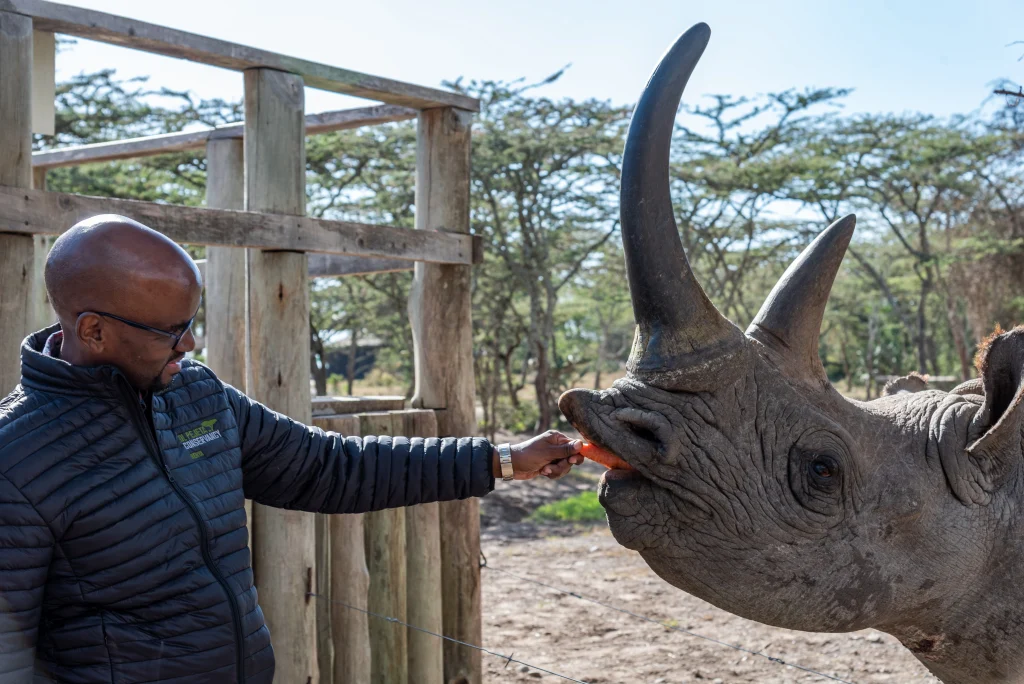
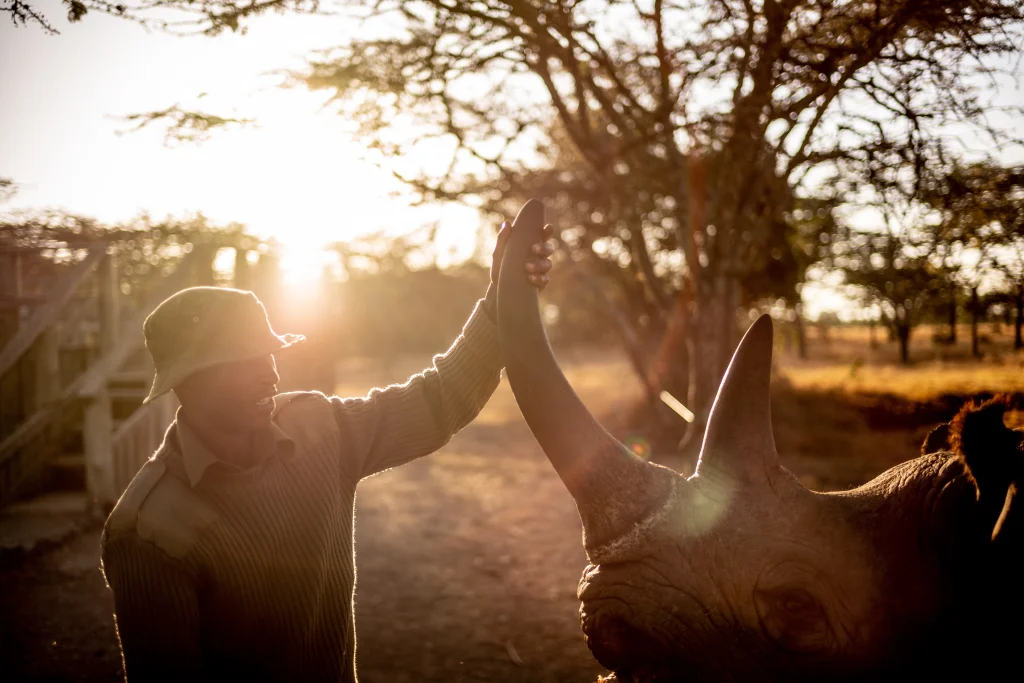
This is, in many ways, Baraka’s greatest contribution to black rhino conservation. Every person who left Ol Pejeta having touched Baraka became a small but powerful advocate for the imperiled species: someone who could speak about rhinos not from a textbook, but from a personal experience. Over the years, that ripple effect shaped how thousands of people around the world think about rhinos and why protecting them matters.
Baraka’s story cannot be separated from the wider work happening across Ol Pejeta every day. In the mid-1980s, intense poaching reduced Kenya’s eastern black rhino population to a historic low of around 240 rhinos. Today, as home to the largest population of black rhinos in East Africa, Ol Pejeta sits at the epicenter of the region’s efforts to bring this critically endangered species back from the brink of extinction. We stand as th source population of an ambitious Kenyan Government initiative to bring back rhinos to their former range through the Kenya Rhino Range Expansion plan. That work spans round-the-clock anti-poaching patrols, habitat management, vet care, and a long-standing integrated conservation model that has made Ol Pejeta one of the most significant black rhino strongholds on the continent.
This World Rhino Day, we invite you to honour Baraka’s legacy by supporting the work we do to protect rhinos, and the wider mission to safeguard endangered species that Ol Pejeta has championed for decades. Whether through a donation, a visit, or simply sharing his story, every action helps continue the connection Baraka spent his life building.
Written By Sam Miller