
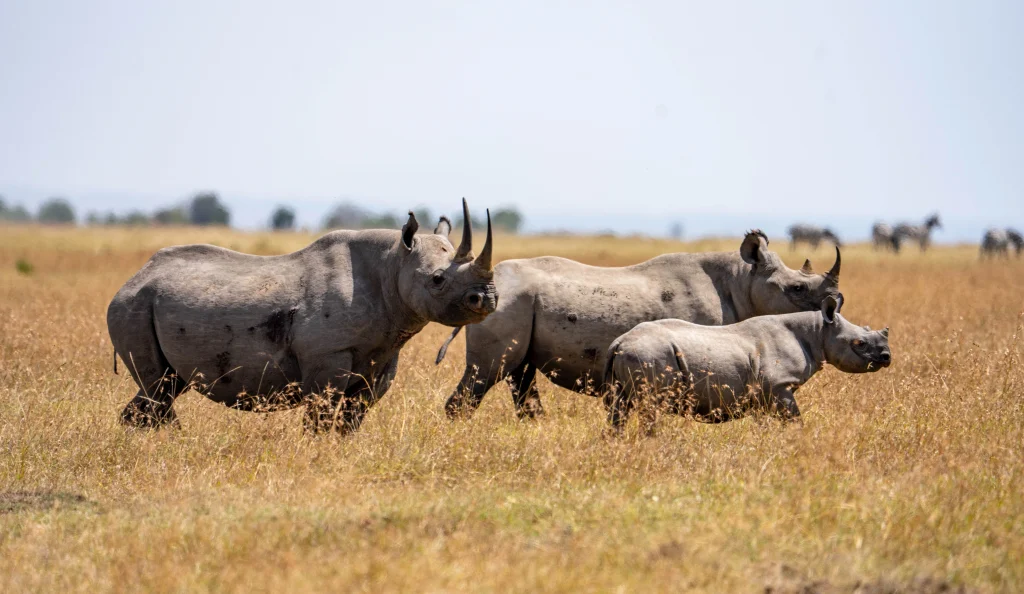
Decades of conservation gains underscore the need for expanded rhino range, habitat restoration and coordinated scientific management.
NANYUKI, Kenya, 12 November 2026 — Ol Pejeta Conservancy is calling for coordinated action to expand secure rhino habitat and strengthen population management following 17 black rhino deaths recorded this year, as growing ecological pressures threaten conservation gains built over decades. All the deaths are because of natural courses, and no poaching incidence has been recorded at OPC.
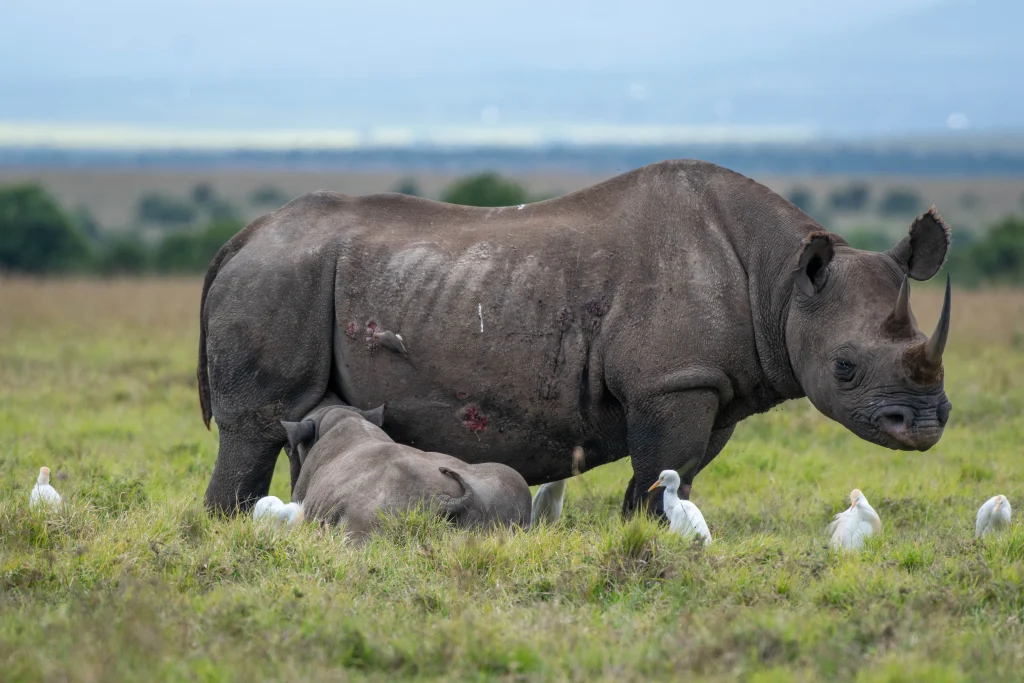
A significant contributor to Kenya’s black rhino recovery, the conservancy reports average annual population growth of approximately 5.5% since its last rhino introduction in 2007. Its November management records list 178 Eastern Black Rhinos, alongside 55 southern white rhinos and two northern white rhinos. Working alongside the Kenya Wildlife Service (KWS) and other conservation partners, Ol Pejeta has helped Kenya’s rhino population recover from 380 animals in the late 1980s to more than 1,200 in 2026.
That progress has enabled Ol Pejeta to support recovery beyond its boundaries. Black rhinos from the conservancy helped establish populations at Loisaba in 2024 and Segera in 2025, contributing to Kenya’s wider rhino range expansion efforts.
Sustaining those gains requires continued attention to habitat quality, food availability and the health of individual animals, following a difficult year in which 17 rhinos died. Recorded causes included confirmed or suspected lion predation (5), old age (4), downer syndrome (2), disease (2) and drowning (1), while the causes of three deaths remain undetermined. All the horns are safely stored with the KWS.
Growing pressure on habitat
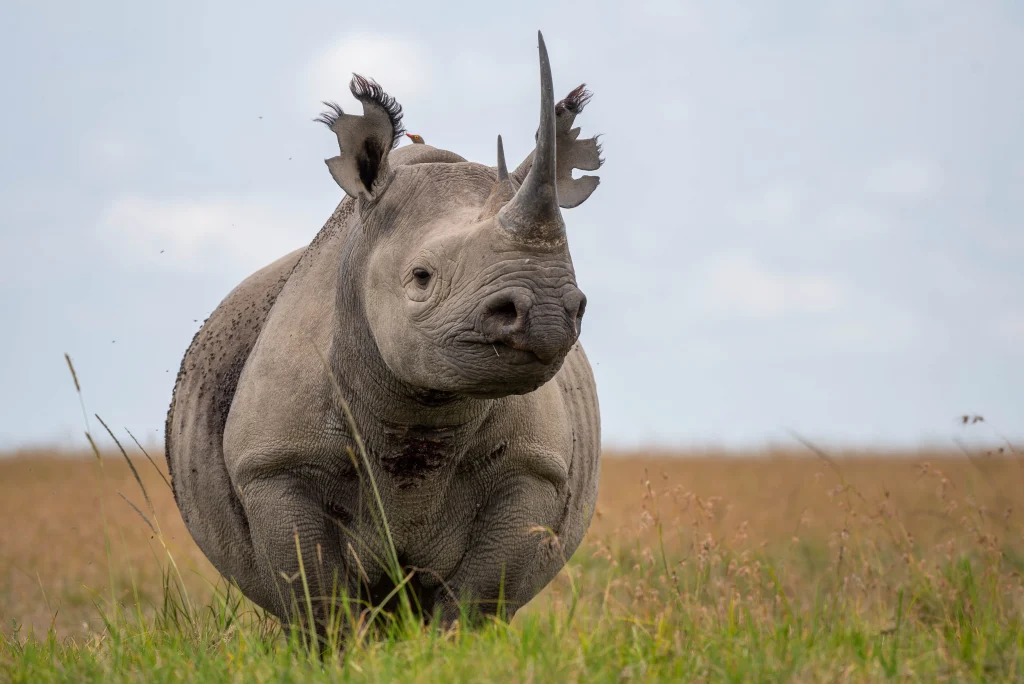
Ol Pejeta’s internal assessments indicate that its black rhino population exceeds the estimated 120 animals its habitat can sustainably support. The Wildlife Research and Training Institute (WRTI) is currently assessing the habitat to determine the ecological carrying capacity.
The assessments report declines in whistling thorn acacia, an important black rhino food source, of more than 80% across the conservancy and over 90% in its eastern sector. They identify sustained browsing pressure and the spread of less palatable Euclea divinorum bush as concerns affecting food availability.
Dry conditions have compounded these changes. Rainfall between April and October 2026 totalled 298.4 millimetres, approximately 56% of the 528.8-millimetre average for the same period between 2020 and 2025.
These pressures are particularly concerning for older animals and individuals in declining body condition. Their contribution to specific deaths requires assessment alongside veterinary findings and monitoring records.
“We deeply regret the loss of each rhino. Our records show that 17 black rhinos died between 26 February and 12th November 2026,” said Philip Coulson, Chairman of Ol Pejeta Conservancy’s board. “Our field teams are currently investigating the status of these two additional calves that have not been recently sighted. We are supporting verification of these records and the circumstances of the losses.”
Mortality records include two confirmed and three suspected cases of lion predation, alongside age-related complications, illness, prolonged downer syndrome and suspected drowning. Some causes remain undetermined because decomposition or skeletal remains limited examination. Several of the animals were elderly, including individuals aged approximately 39 and 42. However, neither age nor habitat pressure provides a conclusive explanation for every death.
According to the conservancy’s account of joint veterinary examinations with Kenya Wildlife Service (KWS), no evidence of poaching was identified in the reported cases. Ol Pejeta has pledged full cooperation with KWS’s population audit and verification exercise, including access to relevant records, personnel and field areas.
Habitat restoration and scientific management
Ol Pejeta’s response combines immediate care for vulnerable animals with habitat restoration and longer-term population planning.
“We have set aside an exclusion zone to help acacia trees recover and planted more than 10,000 seedlings to restore food for rhinos,” Coulson said. “We are also providing extra food and veterinary care to rhinos that need support and watching their health closely. We have secured funding to study what rhinos eat and what they need to stay healthy.”
In partnership with KWS, the conservancy translocated 18 lions in August as an intervention to reduce lion predation pressure. Ol Pejeta is seeking continued collaboration with all key partners including KWS, the Wildlife Research and Training Institute and range expansion partners on habitat assessment and suitable receiving areas for further rhino translocations.
Securing space for the future
Expanding rhino range requires suitable vegetation, reliable water, security and sustained funding for veterinary care and monitoring. It also requires meaningful participation by communities and landholders whose livelihoods depend on the same landscapes. Ol Pejeta’s contribution to the populations at Loisaba and Segera demonstrates the value of such partnerships. Further progress will depend on combining new habitat opportunities with effective management of existing sanctuaries.
The priority of conservancy is to protect the remaining animals, understand the losses and apply the findings to future care. Sustaining Kenya’s rhino recovery will require continued cooperation to ensure that population growth is matched by healthy habitat and the resources needed to manage it.
…Ends …
Digital assets:
Photo credits: Ol Pejeta Conservancy.
For media queries, contact:
Guyo Adhi
Ol Pejeta Conservancy
Email: guyo.adhi@olpejetaconservancy.org
Mobile: +254 701 928 662