
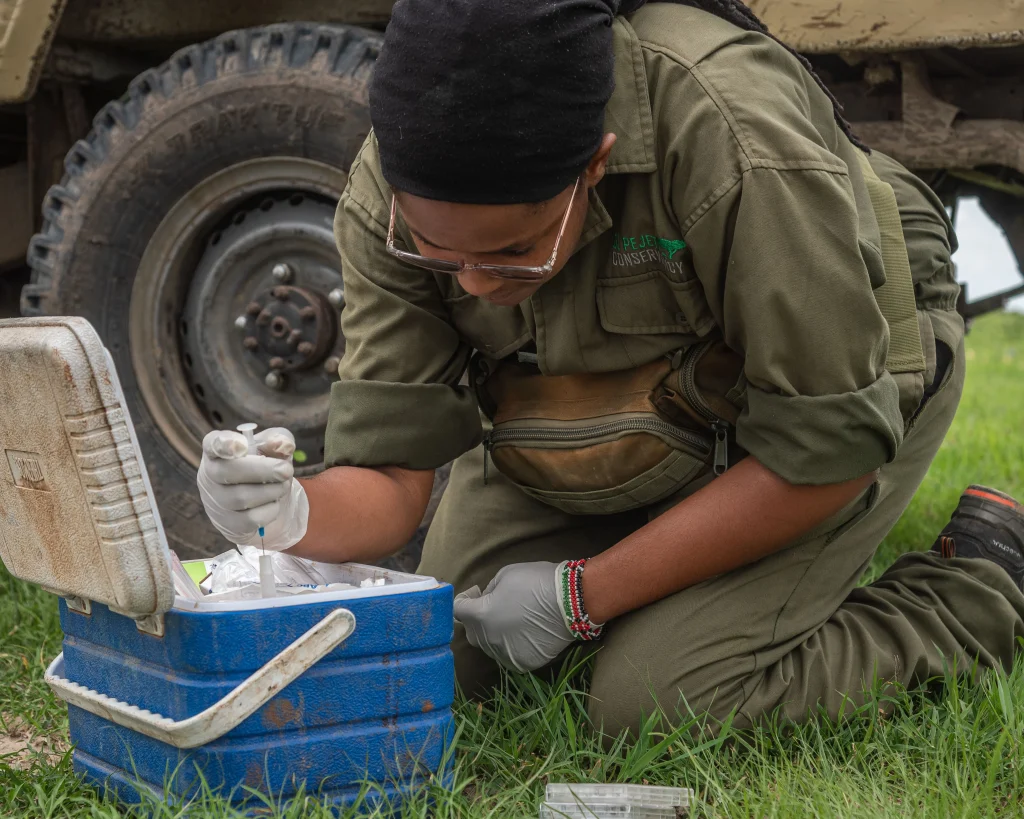
We sat down with Dr Florence Kang’ethe, one of Ol Pejeta’s resident vets, to talk about her journey into wildlife conservation, what drives her, and what she hopes to see change for the next generation of women in the field.
A childhood spent watching and wondering
Florence’s path to veterinary medicine did not begin in a lecture theatre. It began on family trips to Nairobi National Park. “My parents would often take us to Nairobi National Park and the orphanage, where my interest first sparked,” she recalls. “We would also visit other parks around the country, which made it even more special.”
Alongside those early visits, Florence grew up watching nature documentaries, captivated by the diversity of wildlife species and the ecosystems that sustained them. But as she grew older, the picture became harder to look at. She began noticing the pressures bearing down on the natural world: poaching, the bushmeat trade, disease, habitat loss. She felt something shift inside her. “Those changes firmed up the passion in me to join conservation as a veterinarian,” she says. “To give a voice to the animals, offer aid, and make a change.”
Recognised at the top of her field
In 2024, Florence was named one of Kenya’s Top 40 Under 40 Women by Business Daily Africa, a recognition that she describes as a profound personal milestone. “It affirmed my lifelong passion for treating animals as family and my journey from a ‘girl in the wild’ to a leading veterinary figure at Ol Pejeta,” she reflects.
The award arrived just before her 30th birthday, a moment she describes with quiet significance. For Florence, it validated not only the work she has done, but the resilience required to do it: the heartbreak of losing endangered animals, the emotional weight of witnessing cruelty, and the importance of a strong support system when fieldwork can feel isolating. “It mirrors the patience and empathy I’ve honed while caring for my 29 chimpanzees at Sweetwaters Chimpanzee Sanctuary,” she says, “diagnosing non-verbal patients in the field.”
Beyond the personal meaning, Florence sees the recognition as something larger. It shines a light on women in conservation, elevates Ol Pejeta’s model of veterinary care within Kenya’s broader wildlife sector, and perhaps most importantly, sends a message to the young women watching: this field is for you.
Life on the conservancy
Ask Florence what a typical day looks like, and she’ll tell you there is no such thing. Her work spans routine health checks and emergency field interventions, as well as the daily care of the 29 rescued chimpanzees at Sweetwaters Chimpanzee Sanctuary. One moment she might be monitoring the health of a black rhino; the next she could be called out to treat an injured animal somewhere deep in the conservancy. No two days are the same, and that, she suggests, is precisely the point.
Advice for the next generation
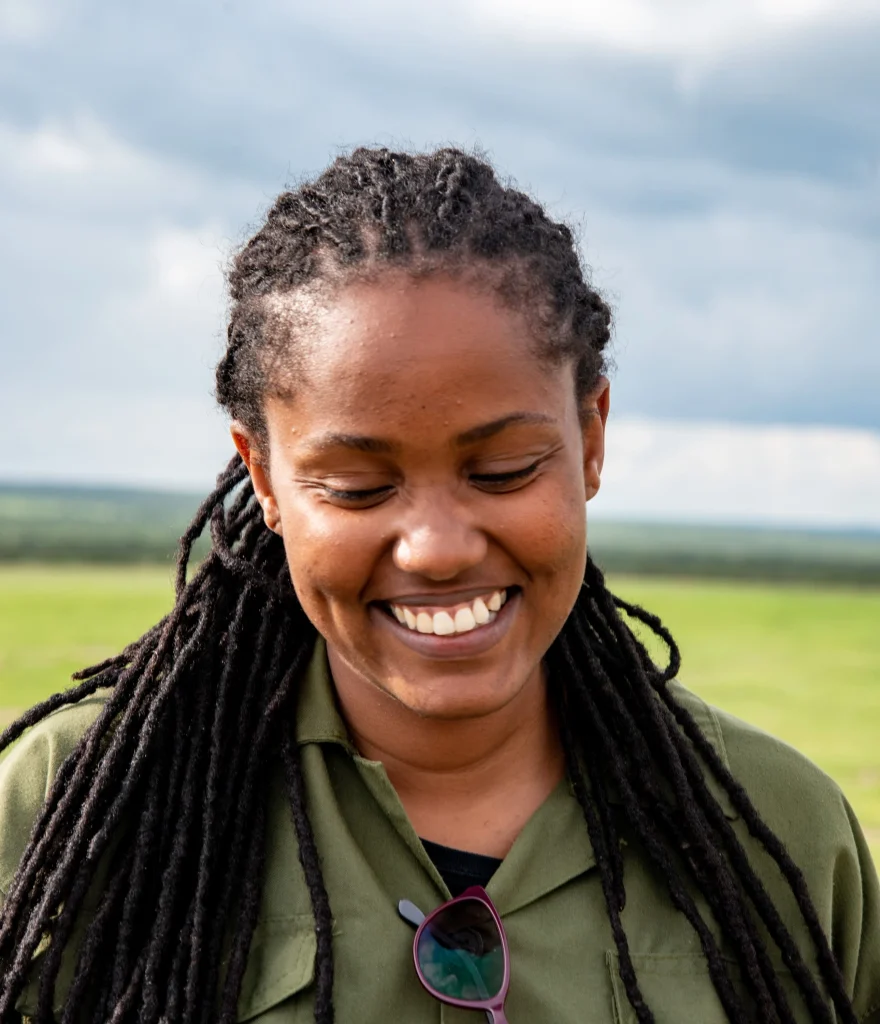
Mentoring young people, particularly girls and young women interested in conservation, is a cause Florence holds close. She works with local schools and is thoughtful about the advice she gives to those considering the path she has taken.
Her guidance is rooted in honesty. She encourages young women to embrace the field fearlessly, while acknowledging that it comes with real challenges. She stresses the importance of building experience through volunteering at wildlife clinics and conservation projects, and of developing emotional intelligence and adaptability, qualities she considers as essential as any technical skill. She speaks plainly about the need to prioritise self-care when managing the physical and emotional demands of the job, and she is a firm advocate for seeking mentorship from women who have already navigated the terrain.
“Stay committed and passionate about your dreams and your work,” she says. “The rewards of contributing to wildlife conservation and health are immense.”
As for what still needs to change? Florence believes the barriers for women in this field are real, but not immovable. More visibility, more mentorship, and more stories like hers, told openly and to the right audiences, are part of the answer.
Written By Sam Miller